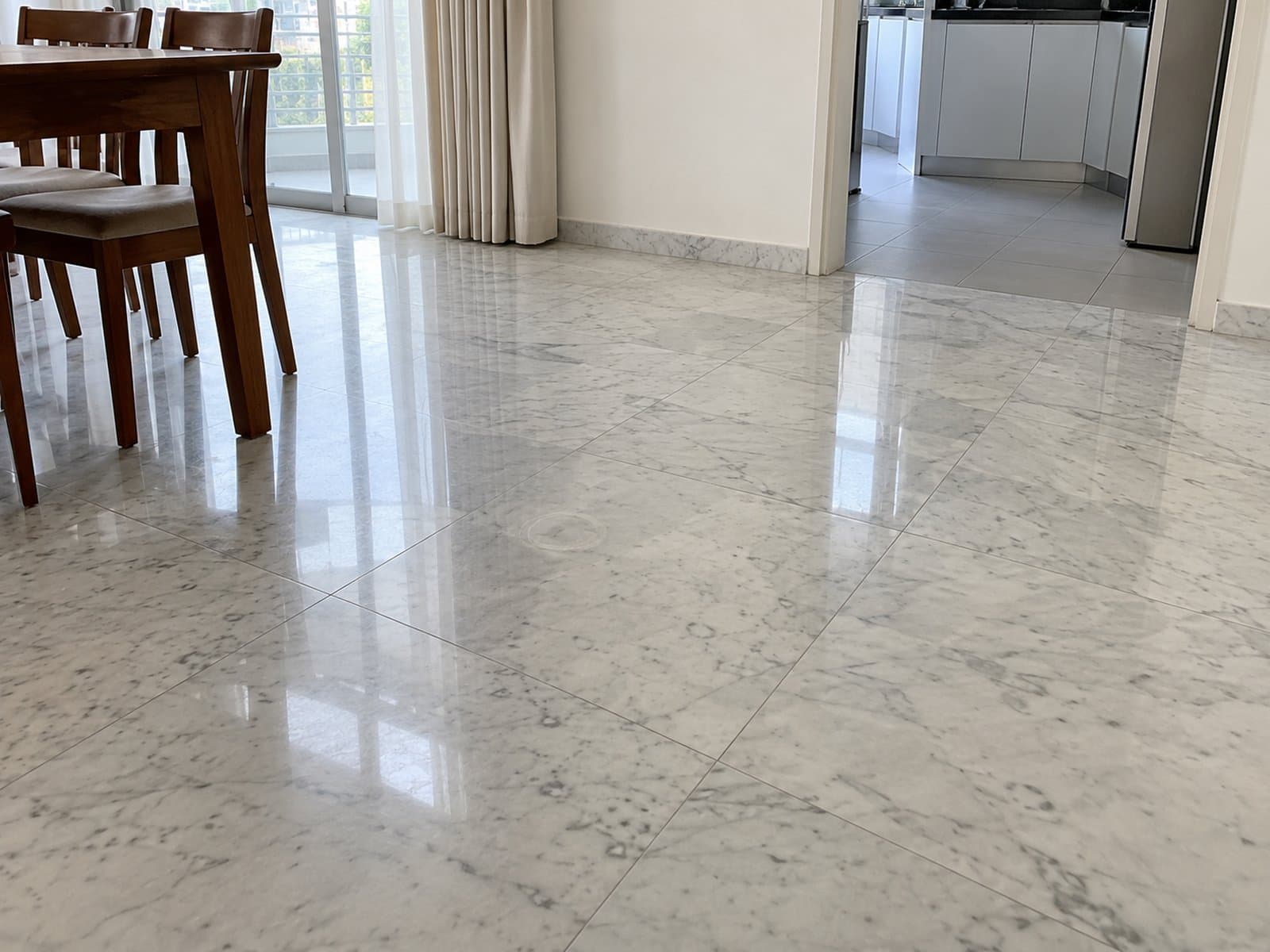
How to remove stains from tiles and marble safely: how to tell etching, rust and white powder apart, what to avoid, and when to book a free site visit.
In this article
Before You Buy a Stain Remover, Check Two Things
Quick answer: to remove stains from tiles or marble, check the floor material and the kind of mark before choosing a treatment. For a fresh spill, blot with a dry cloth, don't scrub, and don't add your own chemicals. A dull patch left by acid on marble needs a surface assessment rather than another stain remover.
The mark may be sitting on top of the floor, soaked into the stone, or part of a damaged finish. Start by working out which one you're dealing with. You don't need to run experiments on the floor.
Key takeaways
- Check the floor material before treating a mark. If you're unsure whether it's tile or natural stone, follow the stone precautions until someone checks it.
- A dull patch on marble may be etching. Acid can damage the finish, and a stain remover won't restore that shine. Polishing usually helps, but the crew needs to see the floor first.
- Blot with a dry cloth, don't scrub, and don't add your own chemicals. That's the first aid to follow before the crew comes.
- Keep vinegar, lemon and toilet-bowl cleaners off marble. Acids can etch marble, and many rust removers and toilet-bowl cleaners contain an acid that attacks every kind of stone, including granite.
What Is Your Floor Made Of?
Glazed Ceramic and Porcelain
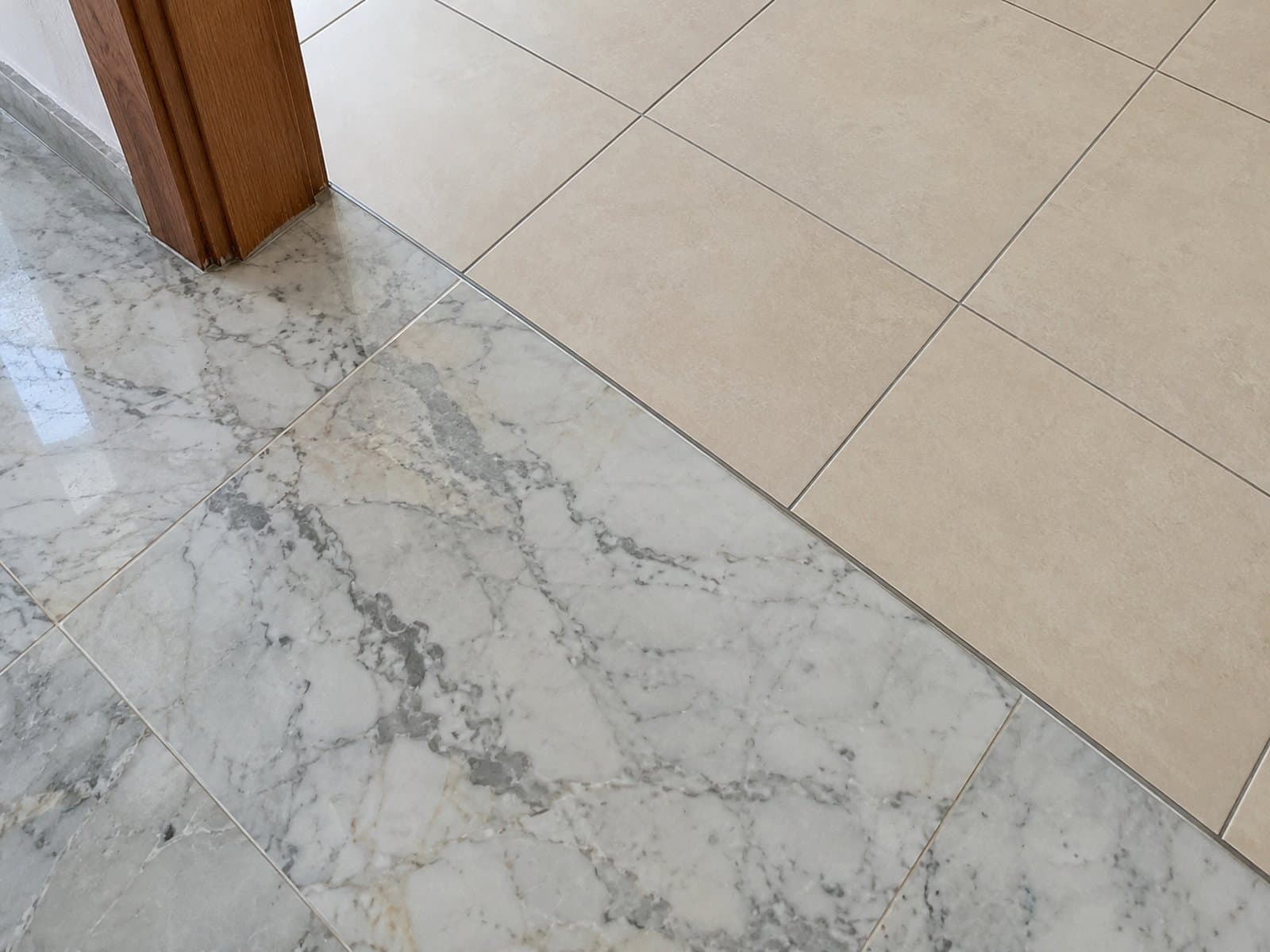
Check whether the floor is glazed ceramic or porcelain before applying a tile-cleaning tip. For porcelain, including glazed and unglazed finishes, Emser's care guidance says to avoid acid, bleach and ammonia cleaners, as well as steel wool and abrasive pads. Grout colour can also change with unsuitable cleaners.
Marble, Limestone and Other Calcium-Based Stone
Marble, limestone and other calcium-carbonate stone react to acids. Vinegar and lemon can leave the surface dull or etched. Keep them off these floors, even if a cleaning tip describes them as natural.
Granite
Granite resists most kitchen acids better than calcium-based stone, but acidic cleaners still aren't recommended. That resistance doesn't make granite suitable for any bottle labelled stain remover. Some acids attack every kind of stone.
If you don't know the material, follow the stone precautions for now. Don't use a chemical test to find out. Yellowbee's free site visit includes checking the floor material and condition.
What Kind of Mark Is It?
Here's the short version. Each one is explained below.
| What you see | What it may be | What to do |
|---|---|---|
| Dull marble after an acidic spill | Acid etching of the finish | Don't add remover. Get it checked |
| Dark patch after an oil spill | Oil soaked into the stone | Blot a fresh spill. Don't scrub or add chemicals |
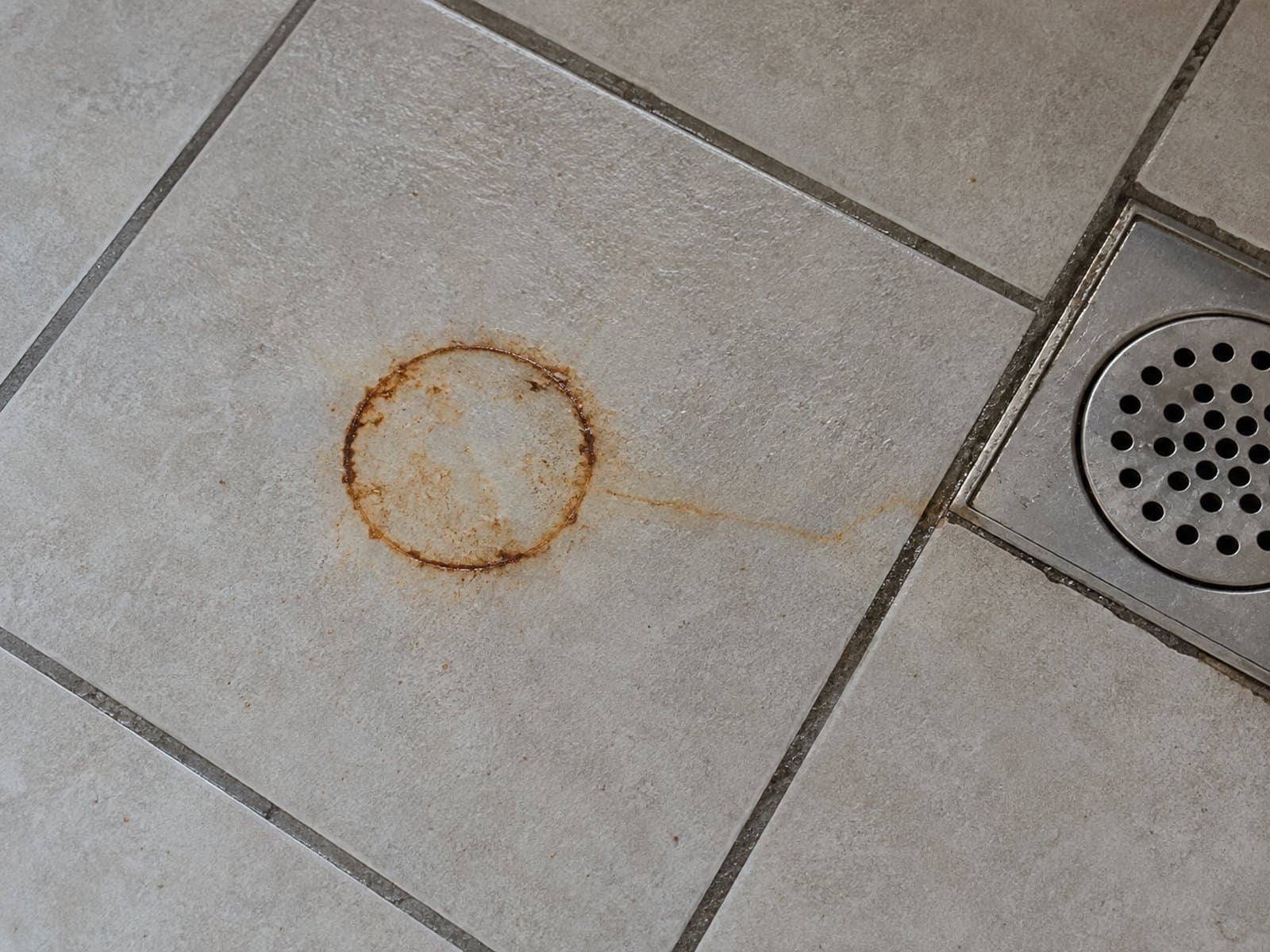
| Orange-brown ring shaped like a can or chair leg | Rust from metal | Keep rust removers off stone. Get it checked |
| White powder that comes back after wiping | Mineral salts carried up by moisture | Have the floor and the moisture source checked |
| Haze left after renovation | Cement haze | Read our cement stains guide |
Dirt or Residue Sitting on the Surface
Look at whether the mark appears to sit on top of the floor or changes the colour or shine within it. Note what was spilled or used there, if you know. Keep that for the assessment. Don't try several cleaners to find out.
If the concern is cement haze after renovation, use the separate guide to cement stains on tile floors. This guide focuses on everyday marks and damage to the finish.
A Stain That Has Soaked Into Stone
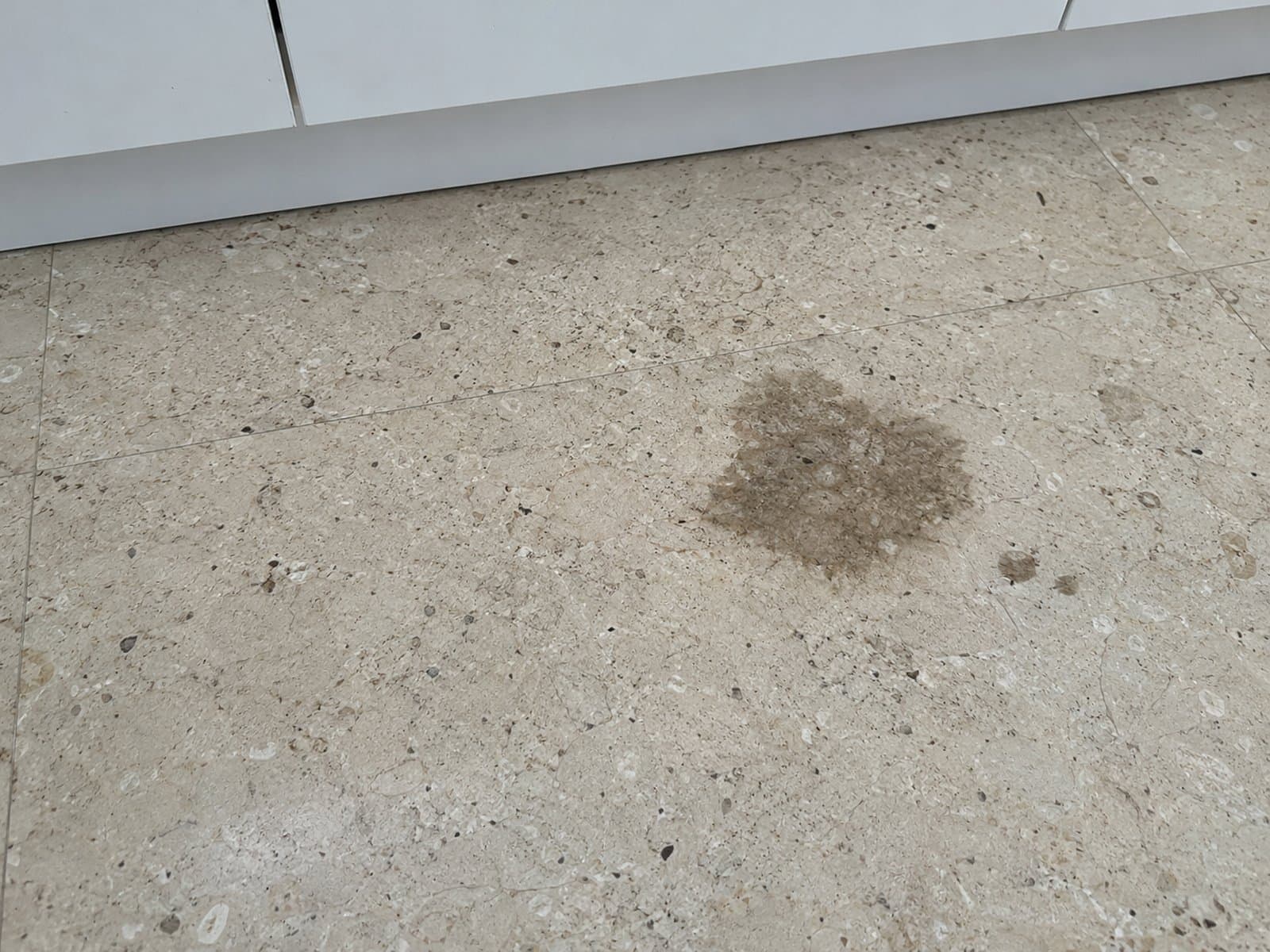
Oil-based stains darken stone. An irregular darker patch can be a clue, especially when you know oil was spilled there. Coffee, tea, food and urine can leave pinkish-brown marks on stone. The colour helps narrow the possibilities; it doesn't confirm the cause by itself.
Rust marks are orange-brown and can follow the shape of the metal object that left them. Check the shape against anything that stood there, such as a metal can or furniture leg. Don't reach straight for a rust remover: read the warnings under "What Not to Put on Marble or Tile" first.
A Dull, Rough-Looking Patch After an Acidic Spill
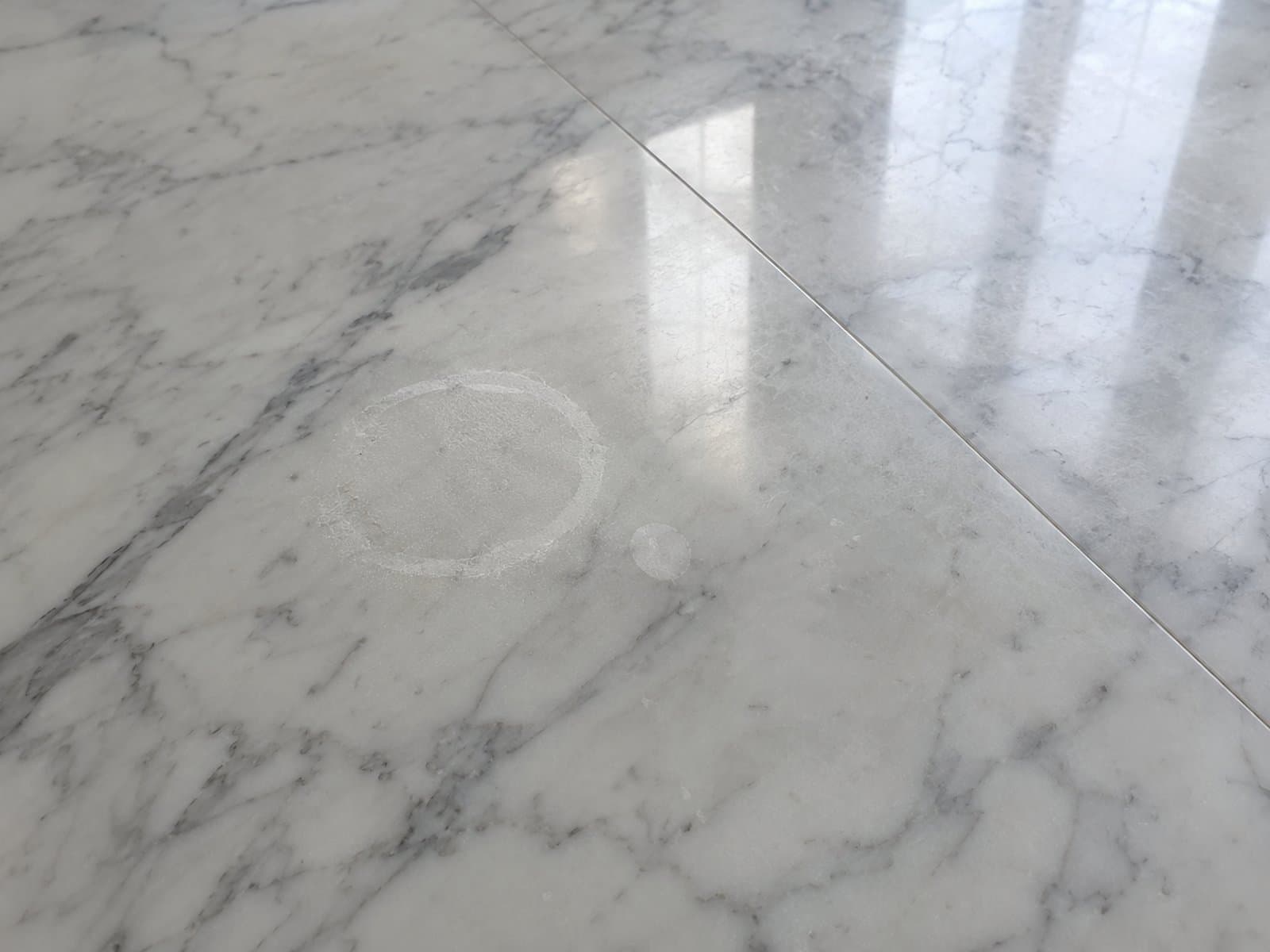
A dull patch where vinegar, lemon or another acid touched marble may be etching. Acid has affected the surface finish. Treating it as a stain and adding more remover won't restore the shine.
Polishing usually fixes acid-dulled or etched marble. The crew needs to see how badly the surface is affected before saying more.
White Powder That Comes Back
Efflorescence is white powder left by mineral salts that moisture carries up from below the surface. Adding water only makes it disappear temporarily. If it keeps returning, the moisture source needs checking.
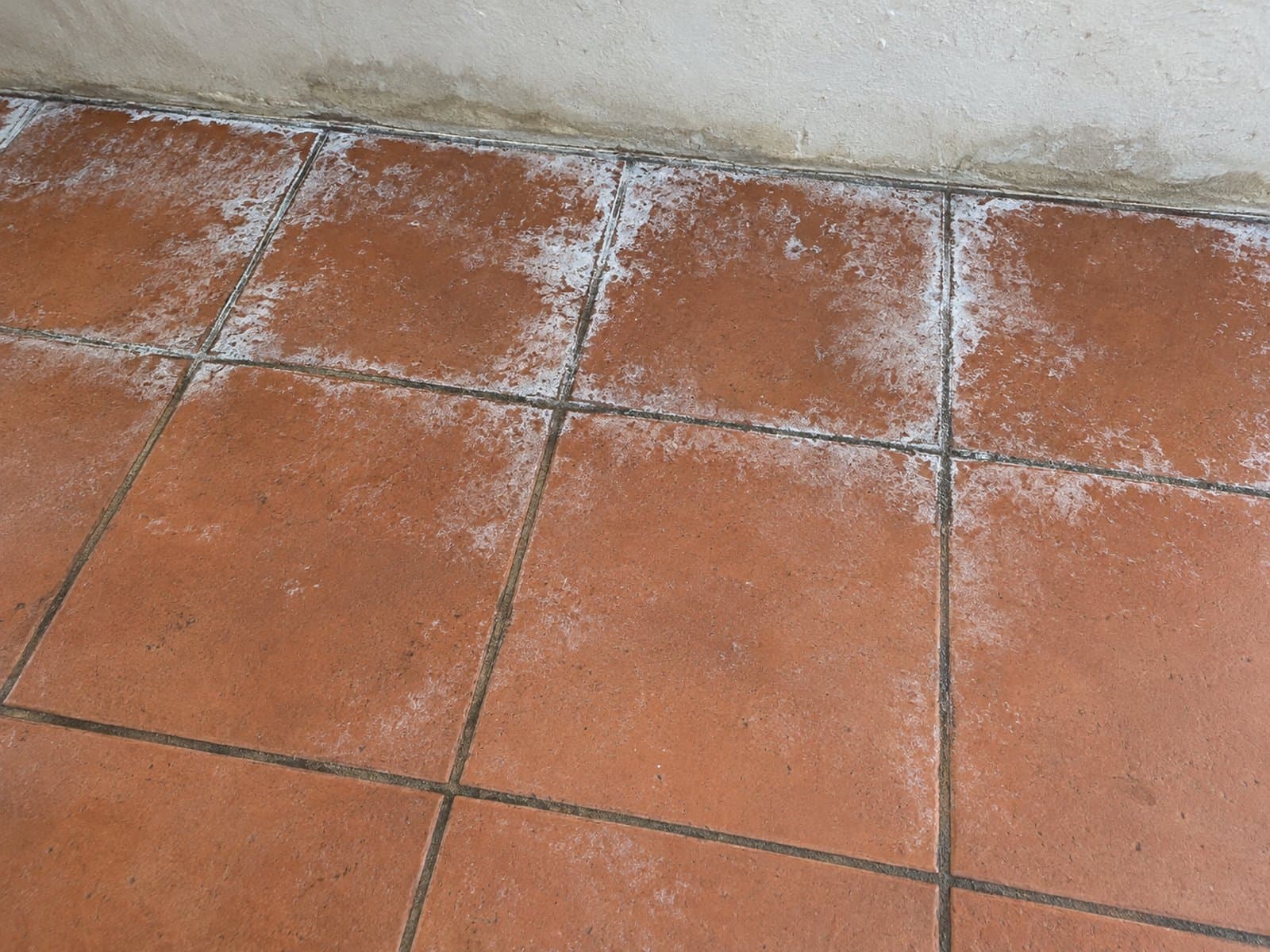
Don't assume every white mark is efflorescence. Note whether it's powdery and whether it returns, then have the floor checked rather than treating the colour alone.
Yellow or White Marks on Bathroom Tiles
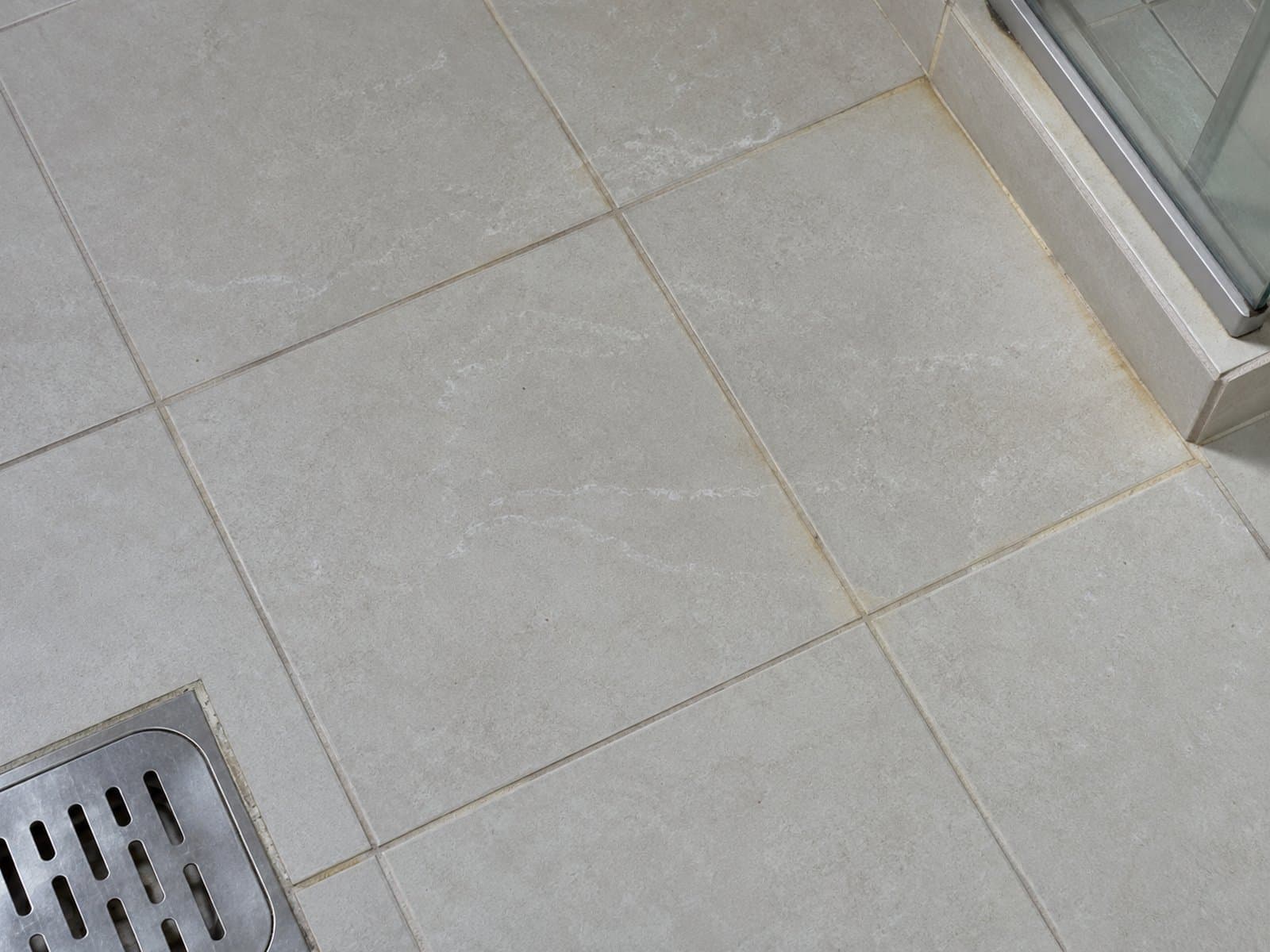
Look closely at where the mark sits: across the tile face, along the grout, or in both places. Check whether you're seeing a surface residue, a colour change or a dull patch. Yellow or white on its own isn't enough to choose a treatment.
If you still can't tell, stop there. Follow the first aid below and get it checked instead of scrubbing harder.
What to Do Right Now
Before the crew comes, keep first aid simple:
- Blot with a dry cloth.
- Don't scrub.
- Don't add your own chemicals.
For an old mark with nothing to blot, leave it alone for the assessment. A home-made mix isn't part of this first aid.
What Not to Put on Marble or Tile
The Natural Stone Institute's stone-care guidance warns that lemon, vinegar and other acids can dull or etch calcium-based stone. That includes marble and limestone. Don't use them as stain removers on these floors.
The same guidance says many rust removers and toilet-bowl cleaners contain traces of hydrofluoric acid. It attacks all stone, including granite. Keep those products off stone floors rather than assuming a toilet cleaner is suitable everywhere in a bathroom.
Scouring powders and creams can contain abrasives that scratch some stones. For porcelain, Emser Tile's care and maintenance guidance says not to use steel wool or abrasive pads. Skip those tools while you're trying to identify the mark.
Emser also says not to clean porcelain with ammonia, bleach or acid cleaners. Its guidance covers glazed and unglazed porcelain and warns that unsuitable cleaners can change grout colour. A stained grout line isn't a reason to try a stronger chemical.
Never mix ammonia and bleach, as the Natural Stone Institute warns. For this first aid, don't combine or add cleaning chemicals at all.
When to Stop and Get It Checked
Stop DIY treatment and arrange an assessment if any of these fits your floor:
- You don't know whether it's tile or natural stone.
- Marble looks dull or rough after vinegar, lemon or toilet cleaner touched it.
- A darkened or rust-coloured mark appears to be within the stone.
- White powder keeps coming back.
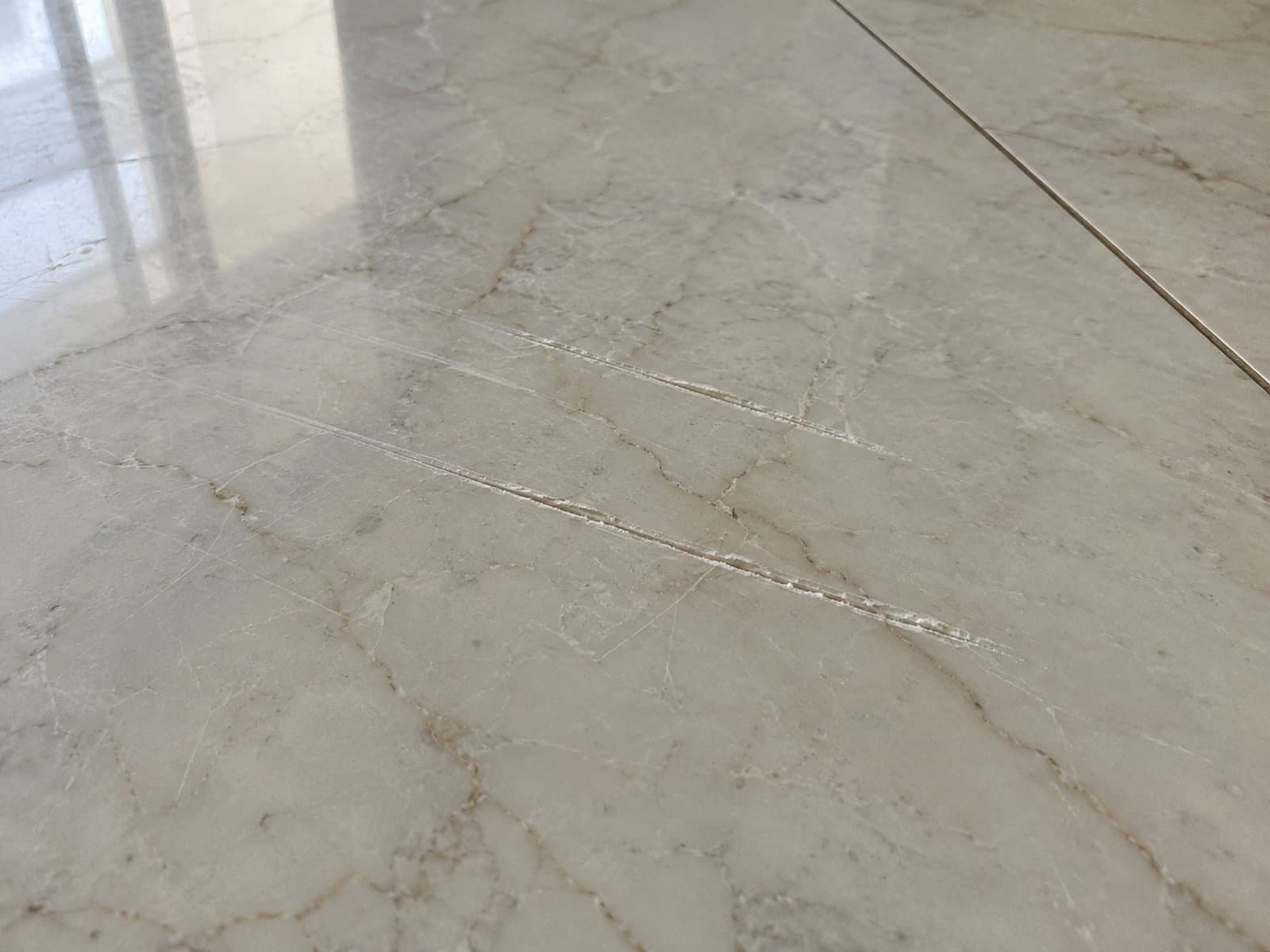
- The floor has deep scratches.
Deep scratches need specialist stone restoration. Acid etching also calls for a professional assessment and repolishing rather than more stain treatment. You can stop at blotting a fresh spill; you don't need to attempt a chemical fix before asking for help.
How Yellowbee Handles Floor Stains

For a floor in Penang, start with our floor cleaning and polishing service. We offer a free site visit to check the material and condition before confirming the price.
If acid has dulled or etched marble, polishing usually fixes it. We'll check the floor in person and give you an honest answer about whether it's fixable. We won't promise full removal from a photo.
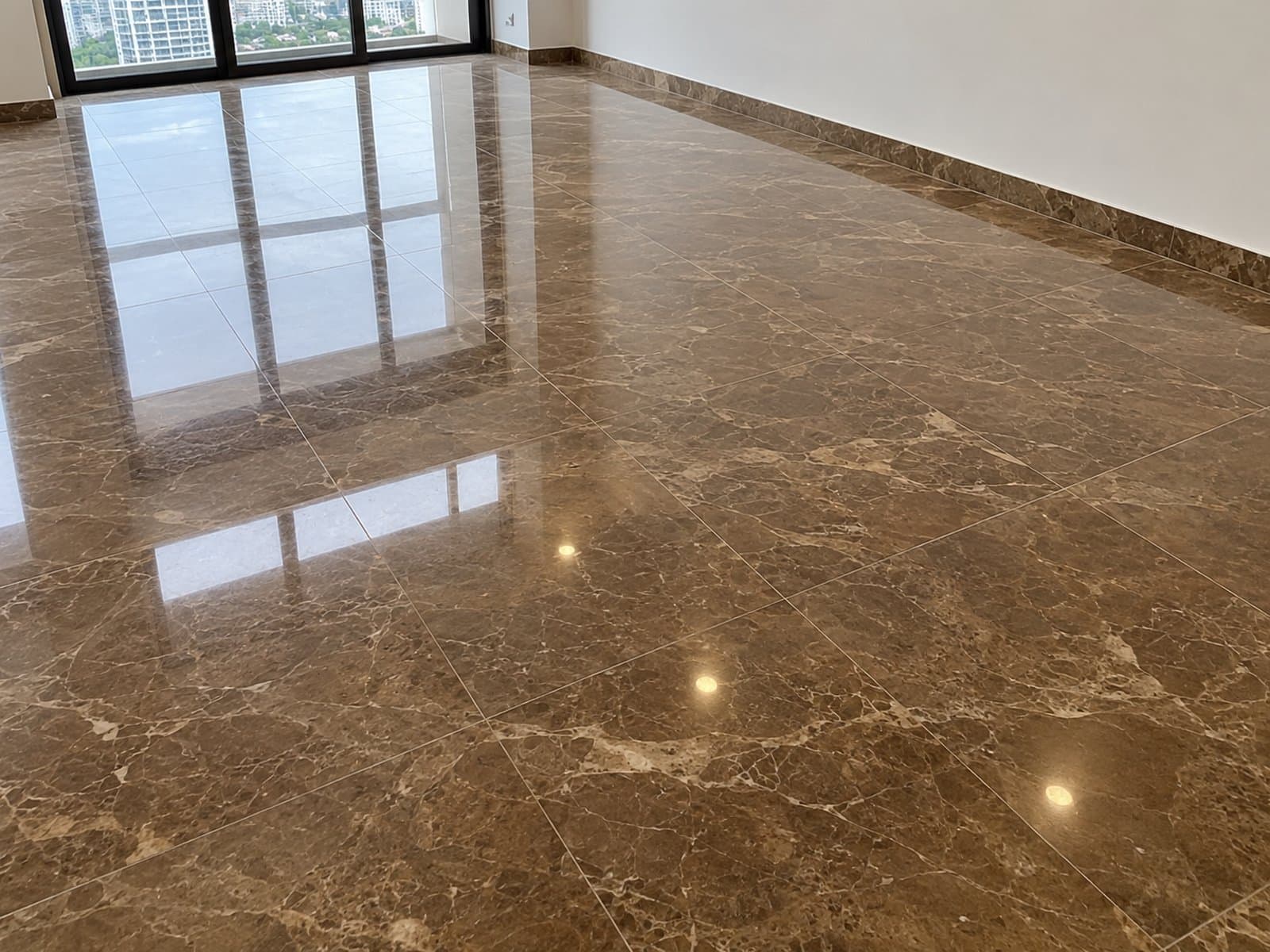
These are the rates on our floor cleaning price page. Each rate is for a different job and floor type. The visit shows which one your floor needs.
- Scrub Cleaning: RM1.00 per sq ft, including grout cleaning.
- Polishing for porcelain, glass tiles and polishable vinyl: RM1.50 per sq ft.
- Restore + Polish for marble, granite and terrazzo: RM3.00 per sq ft.
- Apply Sealer for concrete: RM2.00 per sq ft.
Jobs under 500 sq ft are billed as 500 sq ft. The rates aren't a promise that every mark can be removed, or that every floor needs all these services.
Send clear photos and the approximate floor area to get started. Photos give us a first view only; the final answer comes after the crew sees the floor. To arrange the free site visit, WhatsApp us.
Frequently Asked Questions
Can you clean marble floors with vinegar?
No. Vinegar is acidic and can dull or etch marble, so keep it off the floor. If you've already used it and a dull patch remains, don't add more cleaner. Blot any remaining spill with a dry cloth and arrange a check. Polishing usually fixes acid etching, but the crew needs to see the condition first.
What should you not clean marble with?
Avoid vinegar, lemon and other acidic cleaners on marble. Scouring powders or creams can scratch some stones, and many rust removers and toilet-bowl cleaners contain traces of hydrofluoric acid, which attacks all stone. Don't mix cleaners. For an unexplained mark, stick to blotting a fresh spill with a dry cloth and leave chemical treatment for the assessment.
How do I get rid of an acid or toilet-cleaner mark on marble?
Have the surface checked before trying another remover. A dull patch after acid or toilet cleaner may be etching, where the finish itself is affected. Polishing usually fixes acid-dulled marble, but Yellowbee gives an honest answer after a site visit. Until then, blot any remaining spill with a dry cloth, don't scrub, and don't add your own chemicals.
Why do white stains keep coming back on my tiles?
Recurring white powder may be efflorescence: mineral salts carried up by moisture from below the surface. Water only hides it for a while. Other white marks need identifying too. If the powder keeps coming back, have the floor and the moisture source checked before trying another treatment.
Can a dull marble floor be fixed?
Often, yes. Polishing usually fixes marble dulled or etched by acid, and stone polishing can restore gloss and reduce the appearance of light scratches. Deep scratches need specialist restoration. Yellowbee offers a free site visit to assess the floor and explain whether it's fixable. Photos are useful for a first view, but they don't replace seeing the surface in person.
Need a cleaning service in Penang?
Tell us which service you need, your location and preferred date, then send a few clear photos so we can review the job before quoting.
9AM–5PM, Mon–Sat
https://www.yellowbeeclean.com/blog/how-to-remove-stains-from-tiles