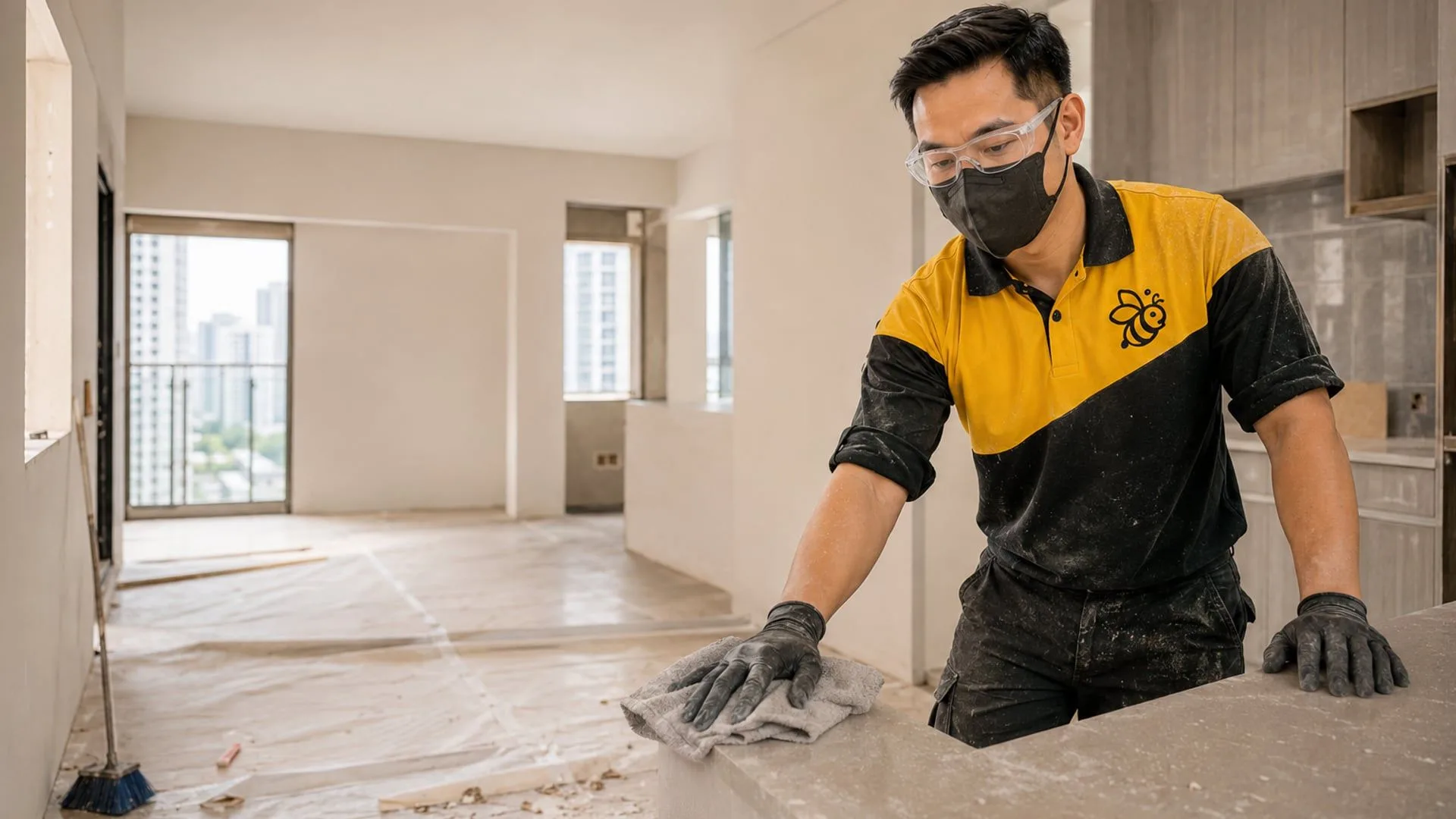
The renovation is finally done, but one walk across the floor leaves white footprints behind. Do not grab the mop yet. Remove the dry dust first or you may turn a dusty job into a muddy one.
The short version: Clear the large debris, use a HEPA vacuum for fine dust, wipe from high surfaces down, then mop with a product that suits the floor. Do not use vinegar, acid cleaner or a razor blade until you know what surface you are dealing with.
This checklist is for working out what you can handle yourself—and what is better left alone.
If cutting, grinding or drilling has left thick dust throughout the home, keep children and pets out until the contractor or cleaner has checked the condition.
01First, Make Sure the Renovation Is Actually Finished
If the contractor is coming back to drill another wall tomorrow, wait first. Cleaning today only gives the dust a sequel nobody asked for.
All cutting, drilling, sanding and touch-up work is complete
The contractor has removed renovation waste and sharp items
No nails, screws, broken glass or exposed wires remain
You have photographed any damage to floors, glass or cabinets
You know what tile, stone, flooring and glass were installed
That last check matters. Marble and ordinary tile can look similar from a distance, but they do not necessarily tolerate the same cleaner.
02What You Need Before Starting
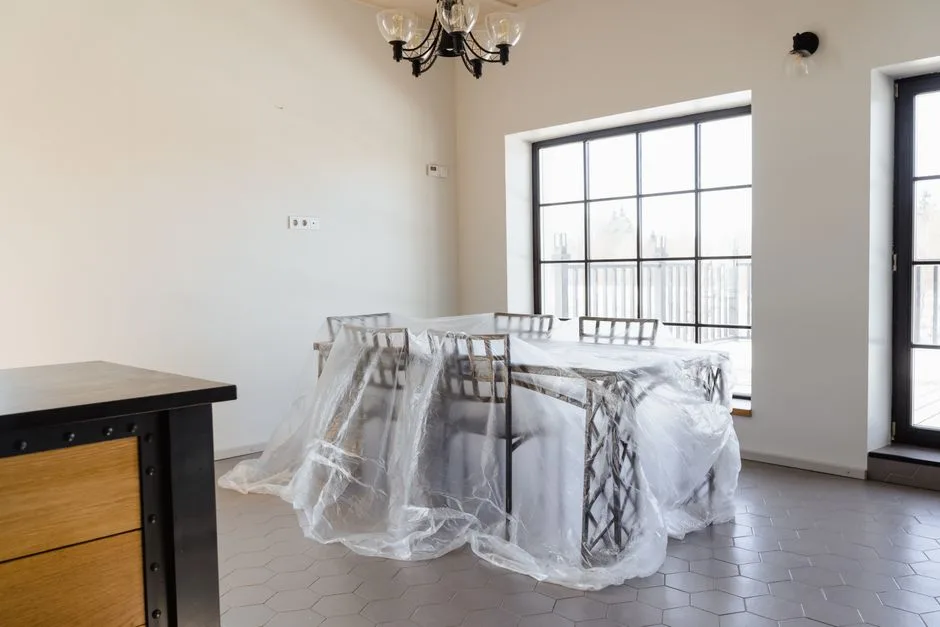
Prepare a HEPA vacuum, microfibre cloths, a mop, two buckets, a soft brush, gloves and covered shoes. Add a suitable mask and eye protection if fine dust is still present.
Not sure what a surface is made from? Do not guess. Ask the contractor or supplier before putting a chemical on it.
03Start With Dust, Not Water
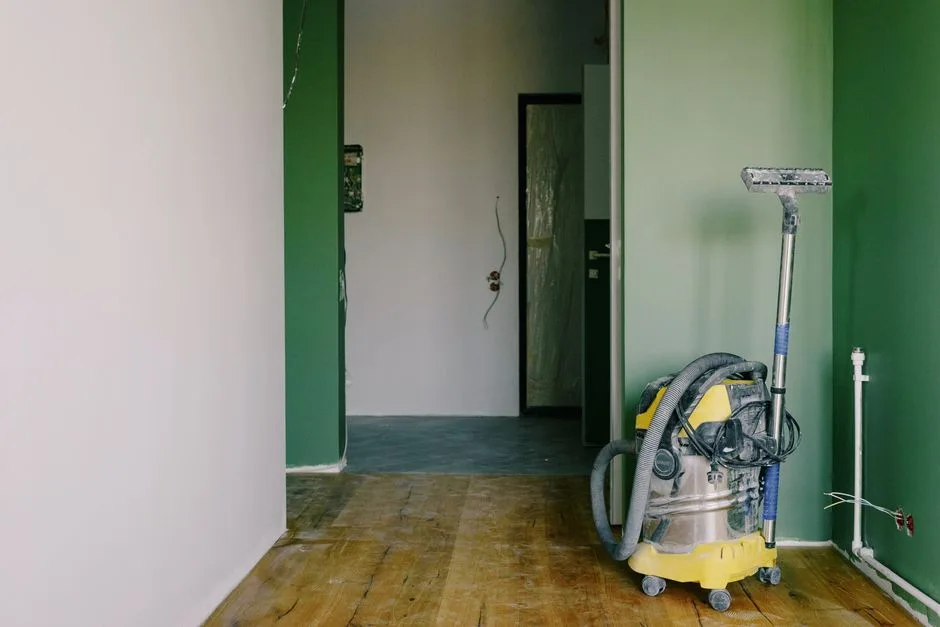
Avoid sweeping fine construction dust around the room. It simply lifts back into the air and settles somewhere else. OSHA's construction guidance supports using a HEPA-filtered vacuum or another method that does not send silica dust airborne.
Pick up plastic, boxes and larger loose debris
HEPA-vacuum door tops, cabinet tops and window tracks
Wipe fans and other high surfaces you can reach safely
HEPA-vacuum the floor, edges and spaces under cabinets
Wipe or mop with a cleaner made for that surface
Replace the water as soon as it turns grey
Grey mop water has already done its shift. Change it rather than carrying the same dust around the house.
04Go Room by Room, but Leave Floors Until Last
Fans and High Surfaces
Switch a fan off before wiping it. Do not dismantle lights, air conditioners or electrical fittings unless you are trained to do so.
Cabinets and Drawers
Vacuum inside first, especially the corners. Follow with a well-wrung damp cloth. Do not leave water sitting on timber, laminate edges or cabinet joints.
Windows
Vacuum the tracks before wiping them. If paint or cement is stuck to the glass, do not immediately reach for a blade. The National Glass Association warns that trapped grit can scratch glass and that razor blades should never be used on coated glass.
Bathrooms
Remove dry dust and fragments first. Do not wash cement or grout residue into the drain. It may disappear from the floor, but that does not mean it has disappeared from the plumbing.
Kitchen
Wipe inside cabinets, the countertop and sink. Wash any dishes or utensils that were exposed while renovation work was happening.
Floors
Vacuum before mopping. Use a cleaner suitable for the installed material, especially with marble, timber and vinyl floors.
05Three Things Not to Use Automatically
Vinegar: It is not a universal tile cleaner. It can damage marble and other natural stone, and MAPEI advises against using it on several tile and grout surfaces.
Razor blades and metal scrapers: Yellowbee uses them for certain jobs only after checking the glass or tile. If you cannot identify the surface, do not practise on your new renovation.
Acid cleaner: We rarely use it because the risk is high. The wrong product or concentration can damage a new surface and create a much more expensive problem.
Never mix cleaning chemicals. Follow the product label and test an inconspicuous area first.
06A Short Checklist Worth Saving
Renovation work is fully complete
Large waste and sharp objects are gone
High surfaces have been HEPA-vacuumed
Cabinets, drawers and window tracks have been cleaned
Floors were HEPA-vacuumed before mopping
Cement and grout residue did not enter the drains
An AC technician was called if dust entered the unit
Save this checklist or send it to your partner or contractor. It is much easier when everyone is checking the same things.
07Can You Do It Yourself?
A light renovation in one area may be manageable if the contractor has removed the waste and the remaining dust is not heavy. Try one room first and inspect the result before committing your entire weekend.
If fine dust covers the whole home, hardened cement or paint is everywhere, or you are unsure about new stone and glass, get the job assessed before experimenting.
Yellowbee provides post-renovation cleaning in Penang. Send us the property type, location, preferred date and clear photos of each affected area so we can check the scope.
The renovation is finished. Now the dust just needs to receive the memo.