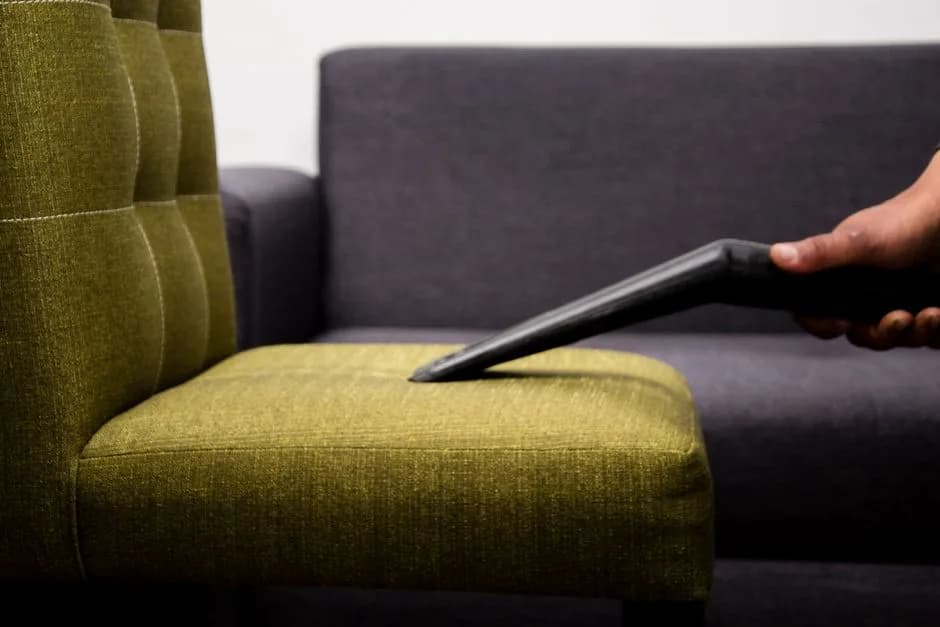
A drink lands on the sofa and the first instinct is to grab soap and start scrubbing. Pause there. Fabric sofas can look similar while needing completely different care.
This guide is for surface dust and a small, recent spill on a fabric sofa. It is not a method for soaking an entire sofa, washing cushion foam, treating mould, or cleaning blood and urine.
01Start With the Sofa's Care Label
Look under a seat cushion or along the bottom of the frame. You may find a care label there. If the sofa came with a manual, check that too. The maker's instructions matter more than a homemade recipe from the internet.
A W code usually allows a water-based upholstery cleaner. S calls for a water-free solvent cleaner. WS allows either method. X means vacuuming or light brushing only.
W and WS are not permission to use every soap, spray or machine. The code gives you a boundary, but it does not replace the full care instructions.
If the label is missing, the fabric is unknown, or the sofa is still under warranty, ask the retailer or manufacturer before using liquid.
02What You Need for a Small Spill
A vacuum with a clean upholstery attachment
Several clean white cloths
A cleaner approved for your sofa
A fan to help the area dry
Your phone for a quick before photo
A white cloth makes it easier to see whether dye is coming off the sofa. A photo gives you something accurate to compare after the test spot has dried.
03How to Clean a Small Spill Safely
Lift any food or solid debris with a spoon or a blunt plastic card. Work gently so you do not press it further into the fabric.
Place a dry white cloth over the wet area and press gently. Lift, move to a clean part of the cloth and repeat. Work from the edge towards the middle so the spill does not spread.
Read the care label before adding a DIY sofa cleaner or any other product. If the label is missing or unclear, stop here.
If the instructions allow a cleaner, test a small amount on a hidden area. Let it dry, then check for colour, texture or water mark changes.
Follow the product's directions and measurements. If it says to apply cleaner to a cloth, use a small amount. Do not pour or heavily spray the sofa.
Press with a clean part of the cloth each time. Do not rub, scrub or use a hard brush.
Use a fan and leave the area alone until it is fully dry. Do not sit on it while it still feels damp.
04Be Careful With Household Shortcuts
Dish soap, vinegar, baking soda, Dettol and Clorox appear in plenty of sofa-cleaning tips. The problem is that a mixture that looks fine on one fabric can leave a pale patch, water mark or sticky residue on another.
WD-40 is not an upholstery cleaner, and a steam iron should not be pressed directly onto the fabric. A product made for kitchen counters, floors or clothes does not automatically belong on a sofa.
Use a cleaner that matches the sofa's care instructions, follow its label and test where nobody normally sees.
05How Long Will the Sofa Take to Dry?
There is no honest fixed time for every sofa. Drying depends on how much liquid was used, the fabric, cushion thickness, airflow and the weather.
Run a fan and open a window if practical. Do not cover the damp area. Check the seams and cushion edges before using the sofa again, because those areas may take longer to dry.
If the cushion stays wet inside or begins to smell musty, do not add more product. Ask someone experienced in upholstery cleaning to check it.
06What About Cleaning the Foam at Home?
Spot cleaning the fabric is not the same as washing the foam inside a cushion. Do not unzip a cover and assume both parts can go into the wash. Covers can shrink or change shape, while soaked foam can be difficult to dry properly.
Follow the maker's instructions for removable covers and cushion filling. If a spill has reached deep inside, get advice before adding more water or putting the cushion back into use.
07When DIY Is Reasonable
DIY can be reasonable for dust, crumbs, pet hair and one small fresh spill, provided the care instructions are clear and allow the method you plan to use.
Stop if you cannot identify the fabric, the label shows S or X, dye appears on the cloth, or the texture changes. If the stain is old, the smell comes from inside the cushion, mould is present or the whole sofa looks dull, get it checked before adding more product.
Do not mix products for blood, urine or vomit, and do not cover the smell with fragrance and assume the problem is gone.
08Checklist Before You Start
I have read the sofa's care label
I know it is fabric, not leather or suede
The problem is limited to one small spot on the surface
The cleaner is suitable for this sofa
The hidden test spot dried without changing
I have a fan and enough time to let the sofa dry
If you cannot tick every box, stop before adding cleaner. It is easier to check an untouched mark than fabric that has already changed colour.
09Sources Used for This Guide
The ACT guide to W, S, WS and X codes explains why the codes are incomplete, why a hidden test matters and why upholstery should not be over-wet.
Care guidance from Ashley, La-Z-Boy and BISSELL follows the same basic rule: start with the sofa maker's instructions and use a method suited to the material.
10Want Us to Take a Look First?
For sofa cleaning in Penang, WhatsApp a full photo of the sofa and a close photo of the mark. Include the number of seats, the fabric type if you know it, and your location. We can look at the job before giving you an estimate.
If you are unsure, stop before adding another product and let us know what has already been used.